

Physical Therapy and Sleep Ergonomics This October: What Happens Between Visits
Last updated: October 2026
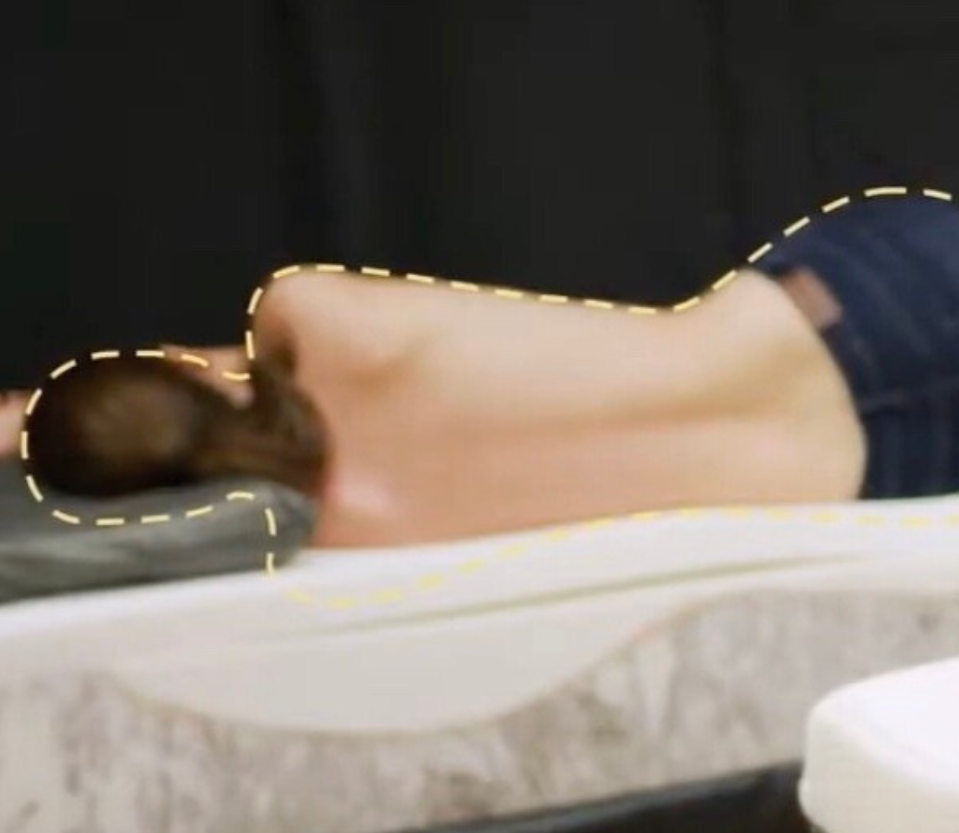
Sleep ergonomics supports physical therapy by setting how the neck is positioned during the hours between visits, and pillow height measurably changes both cervical alignment and neck muscle activity during that time (Kim et al., 2015; Jiao et al., 2025). October is National Physical Therapy Month, a natural point to look at the part of the week a patient spends lying down. The second half of this article covers what a Pillowise fitting measures and how physical therapists can bring sleep into the plan of care.
Key takeaways
- A meta-analysis of nine studies covering 555 participants found pillow use improved waking pain (Pang et al., 2021).
- In a pilot study of 15 adults sleeping on their side, a height matched to shoulder width produced the lowest sternocleidomastoid and trapezius activity and the highest comfort rating (Jiao et al., 2025).
- Pillowise sleep specialists take three measurements (shoulder width, neck circumference, neck length) and combine them with sleeping position and bed type to identify the best-fitting pillow from seven sizes.
What do the numbers say about pillows and waking symptoms?
Pillow choice shows up in how people wake. In a randomized study of 106 side sleepers, pillow type changed waking cervical pain and sleep quality (Gordon et al., 2009).
A meta-analysis of nine studies covering 555 participants found pillow use improved waking pain, with satisfaction with the pillow increasing (Pang et al., 2021). In an uncontrolled study of 84 people with stiff shoulders and neck pain, half of participants reached a clinically meaningful improvement after their pillow height was adjusted (Yamada et al., 2023).
A randomized crossover trial in chronic nonspecific neck pain recruited 70 people, 64 of whom completed both four-week arms. A designed pillow produced greater reductions in neck pain than ergonomic education alone, a mean difference of 8.7 points on a 0 to 100 scale (Vanti et al., 2019). The trial tested a specific spring pillow.
Why does the night matter to a plan of care?
A plan of care is built from clinic sessions and a home program, and both happen while the patient is awake. Sleep is the longest block of the day spent in one position, and the pillow decides the angle of the neck for all of it.
Exercise, manual therapy, and postural education work on mobility, strength, and load tolerance. A pillow at the right height keeps the neck near neutral while the patient is not moving at all, so the two pieces cover different parts of the same day.
What does pillow height measurably change?
In 16 adults without neck symptoms, raising pillow height from 0 to 10 to 20 cm increased T1 slope and the C2-7 Cobb angle while neck tilt decreased, and the authors judged 10 cm most suitable for normal cervical lordosis (Kim et al., 2015).
A crossover study with finite element modeling in 10 healthy participants lying on their backs showed that pillow height changes how pressure is distributed across the head and neck and how the cervical spine is aligned (Ren et al., 2016).
Muscle activity changes too. In a pilot study of 15 adults sleeping on their side, a height matched to shoulder width produced the lowest sternocleidomastoid and trapezius activity and the highest comfort rating, compared with heights at half and one and a half times shoulder width (Jiao et al., 2025).
Why do generic pillows miss?
A standard contoured pillow, not fitted to the individual, performed no better than ordinary shapes in a randomized study of 106 side sleepers (Gordon et al., 2009). No single optimal pillow height can be specified, because it depends on four variables that differ from person to person: cervical alignment, body dimension, contact pressure, and muscle activity (Lei et al., 2021).
Read more: Why pillow fit matters more than shape
Related: National Physical Therapy Month: Sleep Posture and Pillow Fit for Your Patients
What does a Pillowise fitting measure?
Pillowise is a fitted cervical pillow that licensed healthcare providers measure and dispense, made in seven sizes. Our sleep specialists take three measurements: shoulder width, neck circumference, and neck length. Combined with sleeping position and bed type, an algorithm identifies the best-fitting pillow from seven sizes.
Shoulder width is the measurement the EMG study found mattered most. A height matched to it produced the lowest neck and shoulder muscle activity during side sleeping (Jiao et al., 2025), and body dimension is what drives the individual optimum (Tian et al., 2025).
Pillowise pillows are made from premium Dutch memory foam, OEKO-TEX Standard 100 certified, with a uniform cervical height. The size is chosen from those three measurements plus sleeping position and bed type, rather than from a single stock height.
What does the research not show yet?
The mechanism studies are small and enrolled people without neck pain: 16 adults (Kim et al., 2015), 10 (Ren et al., 2016), 15 (Jiao et al., 2025) and 9 (Tian et al., 2025). Reviews of clinical outcomes are mixed, and the most recent screened 29,091 records, included five studies covering 239 patients, and found no clear advantage for any pillow type in chronic neck pain (Ghosh et al., 2025). We position a fitted pillow as an adjunct to the plan of care, alongside the exercise and manual therapy the patient already receives.
How can physical therapists bring sleep into the plan of care?
Ask about sleep at intake and at each re-assessment: preferred sleeping position, the pillow in use and its age, and whether symptoms are most noticeable on waking. Those answers take a minute and give the night a place in the chart.
Tell patients that the home program covers the hours they are awake and the pillow covers the hours they are asleep. A fitted pillow extends the work of the visit into the hours between visits, alongside the exercise, manual therapy, and other care you are already delivering.
The fitting produces one size from seven. Returns and exchanges are handled by Pillowise directly, and more than 5,000 healthcare professionals worldwide trust and recommend Pillowise.
Common questions
Can a pillow be part of a physical therapy plan?
A pillow can sit in the plan as an adjunct to exercise and manual therapy. In a randomized crossover trial in chronic nonspecific neck pain, a designed pillow produced greater reductions in neck pain than ergonomic education alone (Vanti et al., 2019). A meta-analysis of nine studies found pillow use improved waking pain (Pang et al., 2021).
What pillow height do the studies point to?
Imaging in 16 adults found 10 cm most suitable for normal cervical lordosis (Kim et al., 2015), while a review concluded that no single optimal height can be specified (Lei et al., 2021). The individual optimum depends on body dimension (Tian et al., 2025), which is why the fitting starts with measurements rather than a stock height.
Does sleeping position change the right pillow height?
Optimal pillow height differs between back and side sleeping (Lei et al., 2021), and the EMG findings on shoulder width come from side sleeping (Jiao et al., 2025). Sleeping position is one of the inputs to the Pillowise fitting for that reason.
Is a contoured pillow from a store enough?
Not reliably. A standard contoured pillow, not fitted to the individual, performed no better than ordinary shapes in a randomized study of 106 side sleepers (Gordon et al., 2009), and no single optimal height can be specified because it depends on four variables that differ from person to person (Lei et al., 2021). A contour helps only if its height matches the person using it. That is what the fitting settles, in a provider's office.
Find a Pillowise provider or become one
Pillowise pillows are clinically measured and dispensed exclusively through licensed healthcare providers as part of broader sleep, posture, and recovery education.
To locate a Pillowise provider near you, visit: Find a Reseller
Licensed healthcare providers interested in offering Pillowise may register here: Become a Reseller
References
Ghosh, S. K., Goyal, M., & Goyal, K. S. (2025). Effect of pillow on pain, disability and sleep quality in patients with chronic neck pain: A systematic review. Rehabilitación, 59(3), 100922. https://doi.org/10.1016/j.rh.2025.100922
Gordon, S. J., Grimmer-Somers, K., & Trott, P. (2009). Pillow use: The behaviour of cervical pain, sleep quality and pillow comfort in side sleepers. Manual Therapy, 14(6), 671-678. https://doi.org/10.1016/j.math.2009.02.006
Jiao, R., Xiao, W., Wang, M., Yu, S., & Li, H. (2025). The impact of pillow height on neck muscle activity: A pilot study. Sleep and Breathing, 29(1), 40. https://doi.org/10.1007/s11325-024-03219-6
Kim, H. C., Jun, H. S., Kim, J. H., Ahn, J. H., Chang, I. B., Song, J. H., & Oh, J. K. (2015). The effect of different pillow heights on the parameters of cervicothoracic spine segments. Korean Journal of Spine, 12(3), 135-138. https://doi.org/10.14245/kjs.2015.12.3.135
Lei, J.-X., Yang, P.-F., Yang, A.-L., Gong, Y.-F., Shang, P., & Yuan, X.-C. (2021). Ergonomic consideration in pillow height determinants and evaluation. Healthcare, 9(10), 1333. https://doi.org/10.3390/healthcare9101333
Pang, J. C.-Y., Tsang, S. M.-H., & Fu, A. C.-L. (2021). The effects of pillow designs on neck pain, waking symptoms, neck disability, sleep quality and spinal alignment in adults: A systematic review and meta-analysis. Clinical Biomechanics, 85, 105353. https://doi.org/10.1016/j.clinbiomech.2021.105353
Ren, S., Wong, D. W.-C., Yang, H., Zhou, Y., Lin, J., & Zhang, M. (2016). Effect of pillow height on the biomechanics of the head-neck complex: Investigation of the cranio-cervical pressure and cervical spine alignment. PeerJ, 4, e2397. https://doi.org/10.7717/peerj.2397
Tian, S., Yao, C., Wang, Y., Cao, X., Sun, Y., Wang, L., & Fan, Y. (2025). The individualized optimal pillow height and neck support design for side sleepers. Medical and Biological Engineering and Computing, 63(2), 535-544. https://doi.org/10.1007/s11517-024-03204-x
Vanti, C., Banchelli, F., Marino, C., Puccetti, A., Guccione, A. A., & Pillastrini, P. (2019). Effectiveness of a "spring pillow" versus education in chronic nonspecific neck pain: A randomized controlled trial. Physical Therapy, 99(9), 1177-1188. https://doi.org/10.1093/ptj/pzz056
Yamada, S., Hoshi, T., Toda, M., Tsuge, T., Matsudaira, K., & Oka, H. (2023). Changes in neck pain and somatic symptoms before and after the adjustment of the pillow height. Journal of Physical Therapy Science, 35(2), 106-113. https://doi.org/10.1589/jpts.35.106

- Pillowise USA
- 615 W Johnson Ave, Suite 104
- Cheshire, CT 06410
- (844) 291 7392
- info@pillowise-usa.com
- Send us a message on WhatsApp