

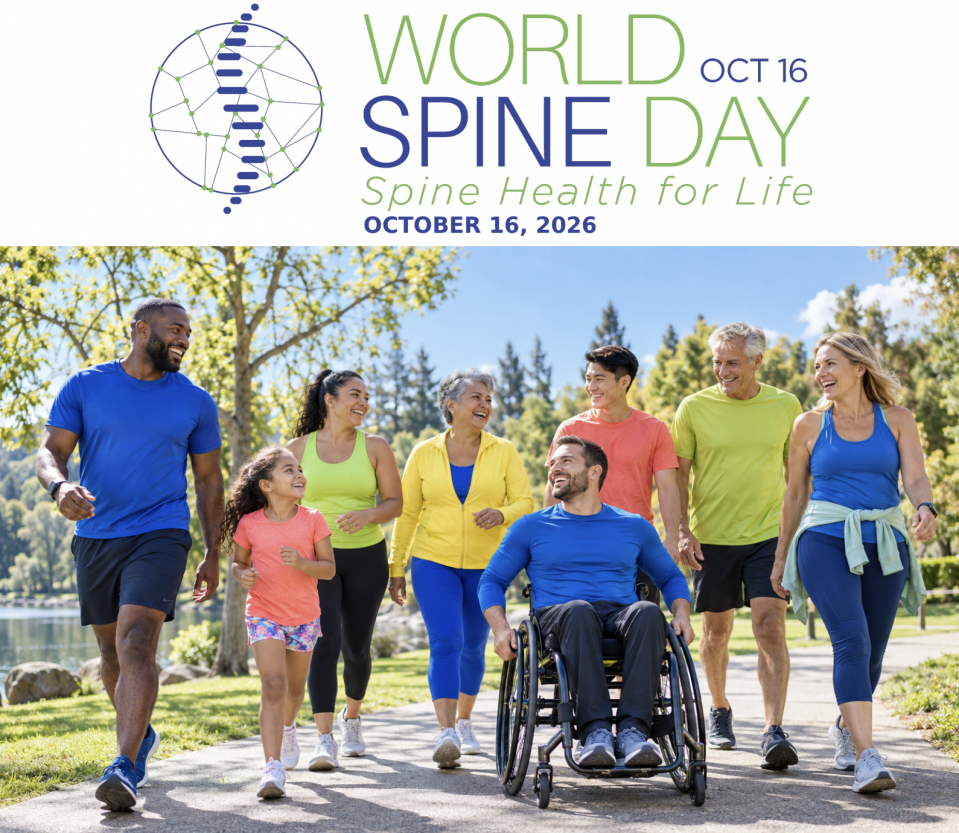
World Spine Day: Does Poor Sleep Make Neck and Back Pain Worse?
Last updated: October 2026
Lost sleep can make pain feel worse: after one night without sleep, 14 healthy adults became more sensitive to heat, cold, pressure and pinprick pain (Schuh-Hofer et al., 2013). The link runs both ways, since hospital workers with high pain scores were more likely to report poor sleep (Vinstrup et al., 2018). Below is what that loop looks like in the research, what pillow height changes in the neck overnight, and how a fitted pillow fits a provider's plan this World Spine Day.
Key takeaways
- One night of total sleep deprivation increased pain sensitivity across several pain types in 14 healthy adults (Schuh-Hofer et al., 2013).
- Among 3,593 hospital workers, a high pain score raised the risk ratio for poor sleep to 1.48 (Vinstrup et al., 2018).
- Pillowise measures shoulder width, neck circumference and neck length, adds sleeping position and bed type, and selects one of seven sizes.
Does losing sleep change how pain feels?
In a crossover experiment, 14 healthy adults spent one night without sleep. Afterward they were more sensitive to heat, cold, blunt pressure and pinprick pain, while their ability to detect non-painful touch and temperature did not change (Schuh-Hofer et al., 2013).
A second experiment kept 24 healthy participants awake for 24 hours. Pain sensitivity rose, the body's built-in pain-dampening response weakened, and repeated pain signals added up faster (Staffe et al., 2019).
Both studies used total sleep deprivation in healthy people. They show the nervous system reads pain differently after lost sleep.
Does pain also cost sleep?
A cross-sectional study of 3,593 Danish hospital workers found 57 percent reported poor sleep. A high musculoskeletal pain score raised the risk ratio for poor sleep to 1.48, and high stress raised it to 1.87 (Vinstrup et al., 2018).
Over a longer window, a 12-month study of 125 healthcare workers found sleep quality carried 13.6 to 30.6 percent of the effect of burnout and stress on pain at multiple body sites (Vieira et al., 2023). That effect showed up at 12 months, not in pain over the previous seven days.
What does short sleep have to do with the neck and shoulders?
In a survey of 1,602 female nurses in Taiwan, 33.9 percent reported chronic neck discomfort and 34.7 percent chronic shoulder discomfort (Chin et al., 2021).
Sleeping under 7 hours was the leading modifiable risk factor the authors identified, with population attributable fractions of 8.8 percent for neck and 8.6 percent for shoulder discomfort. The design was cross-sectional, so it shows association, not cause.
What does pillow height change in the neck overnight?
Sleep holds the head in one position for hours, and the pillow sets that position. In a radiographic study of 16 adults aged 20 to 30, raising the pillow from 0 to 10 to 20 cm increased T1 slope and C2-7 Cobb angle while neck tilt decreased (Kim et al., 2015).
A crossover study of 10 healthy participants lying on their backs, paired with finite element modeling, measured how heights from 110 to 170 mm shift pressure across the head and neck and change cervical alignment (Ren et al., 2016).
The studies establishing that pillow height changes cervical alignment and neck muscle activity were conducted on foam pillows.
Why do generic pillows miss?
A standard contoured pillow, not fitted to the individual, performed no better than ordinary shapes in a randomized study of 106 side sleepers (Gordon et al., 2009). No single optimal pillow height can be specified, because it depends on four variables that differ from person to person: cervical alignment, body dimension, contact pressure, and muscle activity (Lei et al., 2021).
Read more: Why pillow fit matters more than shape
Related: Sleep and Musculoskeletal Health for Healthcare Providers This October
What does a Pillowise fitting measure?
Pillowise is a fitted cervical pillow that licensed healthcare providers measure and dispense, made in seven sizes.
Our sleep specialists take three measurements: shoulder width, neck circumference, and neck length. Combined with sleeping position and bed type, an algorithm identifies the best-fitting pillow from seven sizes.
Shoulder width is the measurement the EMG study found mattered most. A height matched to it produced the lowest neck and shoulder muscle activity during side sleeping (Jiao et al., 2025), and body dimension is what drives the individual optimum (Tian et al., 2025).
The size is chosen from those three measurements plus sleeping position and bed type, rather than from a single stock height.
Pillowise pillows are made from premium Dutch memory foam and certified to OEKO-TEX Standard 100, meaning every component has been tested against the standard's limits for harmful substances.
Where does a fitted pillow sit in a care plan?
A fitted pillow extends the work of the visit into the hours between visits, alongside the exercise, manual therapy, and other care the provider is already delivering.
The visit addresses the spine for part of an hour. The pillow sets the position the neck holds for most of the night.
What does the research not show?
The sleep studies above measured sleep and pain, not pillows, and most enrolled healthy adults or hospital staff. No trial in the pillow literature has tested a pillow fitted to the individual, and no published study has tested a Pillowise pillow, so we position a fitted pillow as an adjunct to care, not a treatment for pain or a sleep disorder.
How can you bring sleep into the visit this World Spine Day?
World Spine Day falls on October 16. It is a natural opening to ask patients two questions: how many hours they sleep, and how their neck feels when they wake.
Patients already ask what pillow they should use. A fitting turns that question into a measured answer your team can give before the patient leaves the office, and any trained staff member can take the measurements.
Returns and exchanges are handled by Pillowise directly, so your front desk is not managing them.
Common questions
Can one bad night make pain worse?
In experiments, yes, in the short term. One night of total sleep deprivation raised sensitivity to heat, cold, pressure and pinprick pain in 14 healthy adults (Schuh-Hofer et al., 2013), and 24 hours awake weakened the body's pain-dampening response in 24 healthy participants (Staffe et al., 2019).
Is sleep linked to neck pain?
Short sleep is associated with neck discomfort. Among 1,602 female nurses, sleeping under 7 hours was the leading modifiable risk factor for chronic neck and shoulder discomfort (Chin et al., 2021). The study was cross-sectional, so it shows association, not cause.
What pillow height is right for me?
There is no single number. A radiographic study of 16 adults found 10 cm most suitable for normal cervical lordosis in that group (Kim et al., 2015), and a review concluded the right height depends on four variables that differ from person to person (Lei et al., 2021). That is why it is measured.
Is a contoured pillow from a store enough?
Not reliably. A standard contoured pillow, not fitted to the individual, performed no better than ordinary shapes in a randomized study of 106 side sleepers (Gordon et al., 2009), and no single optimal height can be specified because it depends on four variables that differ from person to person (Lei et al., 2021). A contour helps only if its height matches the person using it. That is what the fitting settles, in a provider's office.
Find a Pillowise provider or become one
Pillowise pillows are clinically measured and dispensed exclusively through licensed healthcare providers as part of broader sleep, posture, and recovery education.
To locate a Pillowise provider near you, visit: Find a Reseller
Licensed healthcare providers interested in offering Pillowise may register here: Become a Reseller
References
Chin, W.-S., Chen, Y.-C., Lin, T.-T., Guo, Y. L., & Shiao, J. S.-C. (2021). Short sleep and chronic neck and shoulder discomfort in nurses. Journal of Occupational Health, 63(1), e12236. https://doi.org/10.1002/1348-9585.12236
Gordon, S. J., Grimmer-Somers, K., & Trott, P. (2009). Pillow use: The behaviour of cervical pain, sleep quality and pillow comfort in side sleepers. Manual Therapy, 14(6), 671-678. https://doi.org/10.1016/j.math.2009.02.006
Jiao, R., Xiao, W., Wang, M., Yu, S., & Li, H. (2025). The impact of pillow height on neck muscle activity: A pilot study. Sleep and Breathing, 29(1), 40. https://doi.org/10.1007/s11325-024-03219-6
Kim, H. C., Jun, H. S., Kim, J. H., Ahn, J. H., Chang, I. B., Song, J. H., & Oh, J. K. (2015). The effect of different pillow heights on the parameters of cervicothoracic spine segments. Korean Journal of Spine, 12(3), 135-138. https://doi.org/10.14245/kjs.2015.12.3.135
Lei, J.-X., Yang, P.-F., Yang, A.-L., Gong, Y.-F., Shang, P., & Yuan, X.-C. (2021). Ergonomic consideration in pillow height determinants and evaluation. Healthcare, 9(10), 1333. https://doi.org/10.3390/healthcare9101333
Ren, S., Wong, D. W.-C., Yang, H., Zhou, Y., Lin, J., & Zhang, M. (2016). Effect of pillow height on the biomechanics of the head-neck complex: Investigation of the cranio-cervical pressure and cervical spine alignment. PeerJ, 4, e2397. https://doi.org/10.7717/peerj.2397
Schuh-Hofer, S., Wodarski, R., Pfau, D. B., Caspani, O., Magerl, W., Kennedy, J. D., & Treede, R. D. (2013). One night of total sleep deprivation promotes a state of generalized hyperalgesia: A surrogate pain model to study the relationship of insomnia and pain. Pain, 154(9), 1613-1621. https://doi.org/10.1016/j.pain.2013.04.046
Staffe, A. T., Bech, M. W., Clemmensen, S. L. K., Nielsen, H. T., Larsen, D. B., & Petersen, K. K. (2019). Total sleep deprivation increases pain sensitivity, impairs conditioned pain modulation and facilitates temporal summation of pain in healthy participants. PLoS ONE, 14(12), e0225849. https://doi.org/10.1371/journal.pone.0225849
Tian, S., Yao, C., Wang, Y., Cao, X., Sun, Y., Wang, L., & Fan, Y. (2025). The individualized optimal pillow height and neck support design for side sleepers. Medical and Biological Engineering and Computing, 63(2), 535-544. https://doi.org/10.1007/s11517-024-03204-x
Vieira, LMSMA, Mininel, VA, & Sato, TO (2023). Sleep quality as a mediator of burnout, stress and multisite musculoskeletal pain in healthcare workers: A longitudinal study. Healthcare, 11 (18), 2476. https://doi.org/10.3390/healthcare11182476
Vinstrup, J., Jakobsen, M.D., Calatayud, J., Jay, K., & Andersen, LL (2018). Association of stress and musculoskeletal pain with poor sleep: Cross-sectional study among 3,600 hospital workers. Frontiers in Neurology, 9 , 968. https://doi.org/10.3389/fneur.2018.00968

- Pillowise USA
- 615 W Johnson Ave, Suite 104
- Cheshire, CT 06410
- (844) 291 7392
- info@pillowise-usa.com
- Send us a message on WhatsApp